By Rodney Hill | MFG Empire, York, Pennsylvania
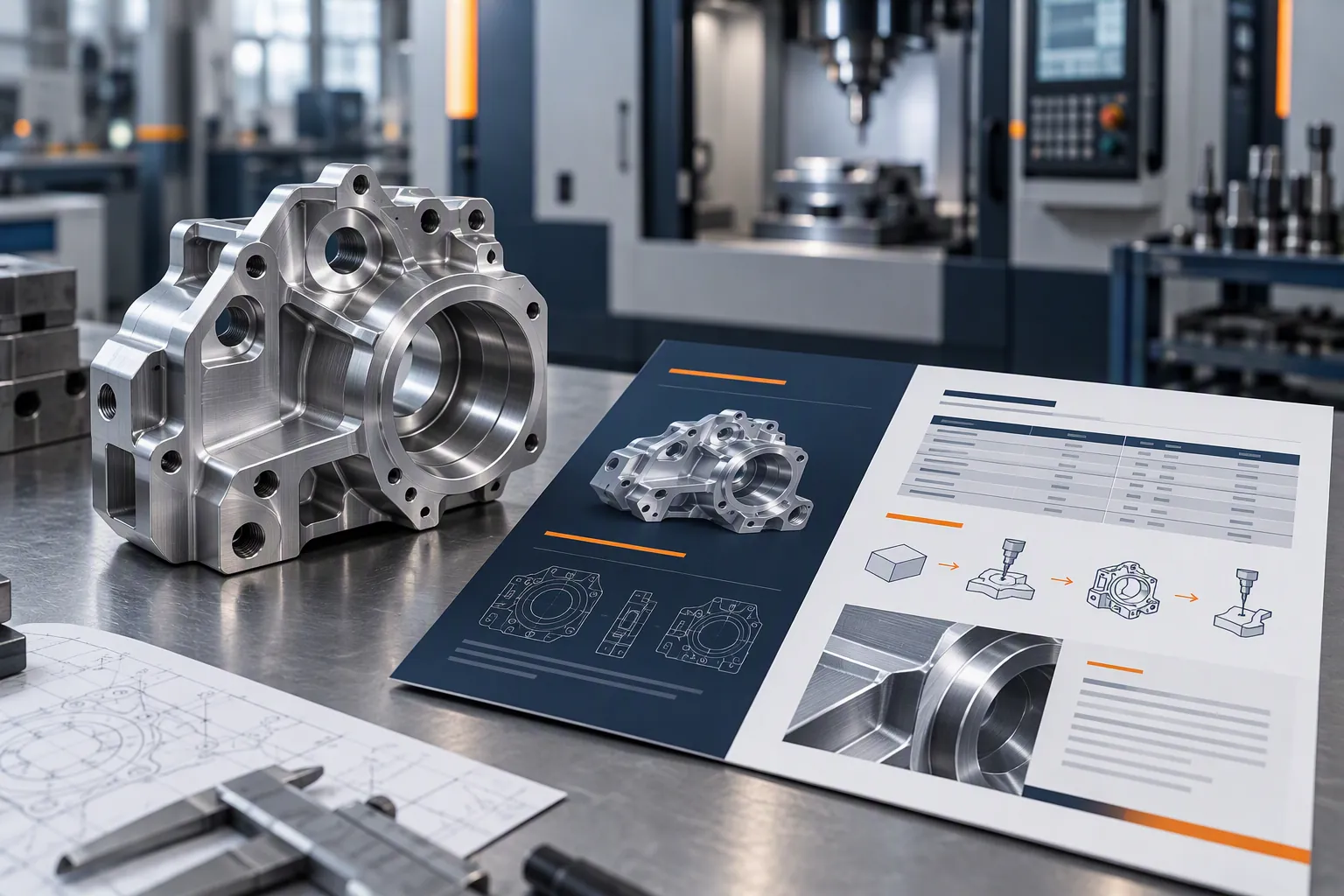
A capability brochure and a trade show panel do work that a paragraph cannot. They carry equipment lists, tolerance tables, process diagrams, and part photography. A buyer scans all of it in seconds.
What does graphic design do for a manufacturer?
It makes technical information readable. A buyer comparing suppliers is extracting specifications. A well-built capability sheet lets that happen quickly, while a wall of text forces the buyer to hunt.
The assets themselves are ordinary. Capability brochures, line cards, equipment sheets, trade show graphics, vehicle lettering, proposal templates, and the images on the website. What makes them work is accuracy, not decoration.
What belongs in a capability brochure?
The things a buyer would have to ask for if they were missing. Equipment by make, model, and work envelope. Tolerances held. Materials run. Certifications with scope and expiration. Industries served and representative parts.
What does not belong is adjectives. Quality, reliability, and commitment appear in every competitor’s brochure, which makes them invisible. A tolerance table is not invisible.
Why do part photographs matter?
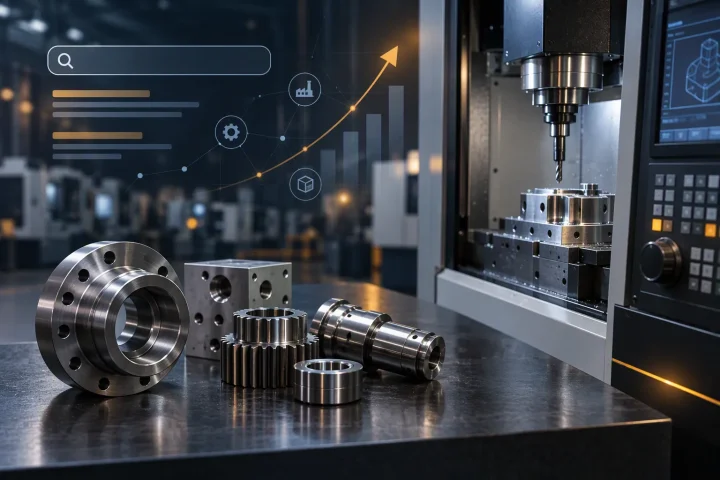
Because they are evidence. A photograph showing surface finish and complex geometry tells a buyer more about capability than any claim.
Photography also carries risk. Parts under nondisclosure, customer-identifiable geometry, and ITAR-controlled work cannot be published. A shop needs a clear internal rule about what can be shown before any of it reaches a brochure.
How does branding differ from a trademark?
A brand is how buyers perceive a shop. A trademark is the legal protection for the identifiers that brand runs on.
The U.S. Patent and Trademark Office describes a trademark as a word, phrase, symbol, or design. It identifies goods or services and distinguishes them from competitors. A shop becomes a trademark owner by using the mark in commerce. Those rights reach only the area where the goods or services are provided.
Federal registration creates nationwide rights. It is not required, and the USPTO notes that owners are responsible for enforcing their own rights.
Should a shop redesign its logo?
Usually not first. A logo is the least informative asset a manufacturer owns. Redesigning it changes nothing a buyer uses to qualify a supplier.
A redesign earns its place when the mark is illegible at small sizes. The same holds when it misrepresents current work, or when several inconsistent versions need consolidating.
How do visual assets support the sales call?
They outlive the meeting. A buyer leaves a trade show with a stack of material. Review happens later, often with colleagues who were not there.
An asset that states specifications survives that second reading. An asset that states enthusiasm does not. The same applies to anything left behind after a plant visit or attached to a quote.
What should be consistent across assets?
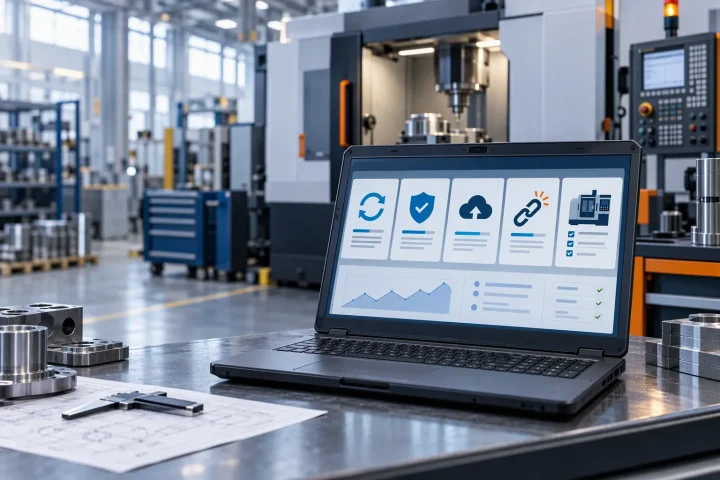
Specifications first. The equipment list in the brochure, on the website, and on the trade show panel should match. A buyer checking one against another is testing whether the shop is careful.
Visual consistency matters less than factual consistency, though both help. Keeping all of it current is ongoing work, covered in what website maintenance actually includes.
When should a shop invest in design work?
After the capability information exists and before a trade show or a major pursuit. Design turns information into something a buyer can use. It cannot create information that was never gathered.
Costs for printed materials move with the broader producer price picture, which the Bureau of Labor Statistics tracks monthly. Timing a print run matters less than getting the content right. A brochure with a wrong tolerance is expensive at any price.
Where this sits alongside search, paid advertising, and site upkeep is covered in the guide to manufacturing marketing.
This article is general industry information and is not financial, legal, or trade compliance advice. Conditions change. Confirm current figures with the cited source.
Frequently Asked Questions
What does graphic design do for a manufacturer?
It makes technical information readable. Capability brochures, line cards, equipment sheets, and trade show graphics let a buyer extract specifications quickly rather than hunting through paragraphs. The assets themselves are ordinary, and what makes them effective is accuracy of the equipment, tolerance, and certification detail they carry.
What should a capability brochure include?
Everything a buyer would have to ask for if it were missing. Equipment by make, model, and work envelope. Tolerances held, materials run, and certifications with their scope. Industries served and representative parts. Adjectives like quality and reliability appear in every competitor brochure, which makes them effectively invisible.
Can a machine shop publish photos of parts it made?
Not always. Parts under nondisclosure, customer-identifiable geometry, and ITAR-controlled work cannot be published. A shop needs a clear internal rule about what may be shown before images reach a brochure or website. Permitted part photography is strong evidence of capability.
What is the difference between branding and a trademark?
A brand is how buyers perceive a shop. A trademark is legal protection for the identifiers the brand uses. The USPTO describes a trademark as a word, phrase, symbol, or design identifying goods or services. Using a mark in commerce creates rights limited to that geographic area.
Does a manufacturer need to register a trademark?
Registration is not required. The USPTO notes that a business becomes a trademark owner by using a mark in commerce, though unregistered rights reach only the area where goods or services are provided. Federal registration creates nationwide rights, and owners remain responsible for enforcing them.
Should a machine shop redesign its logo?
Rarely as a first step. A logo is the least informative asset a manufacturer owns and changes nothing a buyer uses to qualify a supplier. A redesign earns its place when the mark is illegible at small sizes, misrepresents current work, or exists in several inconsistent versions.
About MFG Empire
MFG Empire is a marketing firm in York, Pennsylvania serving manufacturers exclusively. Rodney Hill founded it after more than 25 years on the shop floor, which is why the capability detail comes before the design work here.
Where capability information lives:
- Manufacturing Website Design: Capability pages that state equipment, tolerances, materials, and certifications
- Manufacturing SEO: Research into the process terms purchasing managers use when sourcing
Brochure and website saying different things? Request a quote and we will reconcile them.
About the Author
Rodney Hill is the founder and president of MFG Empire, a marketing firm in York, Pennsylvania built for machine shops, OEMs, and industrial manufacturers. He spent more than 25 years working directly on the shop floor across CNC machining, tool and die, fabrication and welding, and industrial machine dealerships. He troubleshot CNC controls at BobCAD-CAM and built a customer base of over 2,500 users at Dolphin CAD-CAM before turning to marketing full time.
Today he works with manufacturers across North America and overseas, many of them supplying aerospace, space, powersports, and automotive programs. Fox Business has interviewed him on economic pressure facing small manufacturers. He also holds partnerships with ten of the largest MEP networks in the United States.
Reach Rodney at rodney@mfgempire.com or 717-650-0453.
Works Cited
United States Bureau of Labor Statistics. “Producer Price Indexes: July 2026.” United States Bureau of Labor Statistics, 13 Aug. 2026, www.bls.gov/news.release/archives/ppi_08132026.htm.
United States Patent and Trademark Office. “What Is a Trademark?” United States Patent and Trademark Office, accessed 31 Aug. 2026, www.uspto.gov/trademarks/basics/what-trademark.
Related Articles
Manufacturing Marketing: The Complete Guide for Industrial Brands
How Website Maintenance Companies Improve Website Performance