
The Project: Bringing Five Decades of Pump Manufacturing Experience Online
Pacer Pumps is an American pump manufacturer based in Lancaster, Pennsylvania, with a history dating back to 1974. The company originated the self-priming thermoplastic centrifugal pump and manufactures equipment used to transfer water, agricultural chemicals, industrial fluids, and other liquids. Its products serve customers across agriculture, aquaculture, construction, disaster relief, industrial processing, marine applications, and potable water distribution. That variety makes Pacer a resource for buyers with very different operating conditions, fluid requirements, and equipment configurations.
The company’s pump lineup includes eight series: S, G, HP, I, IPW, PC, T, and M. These products cover applications ranging from controlled chemical dispensing with hand-operated pumps to high-volume water transfer and dewatering. Depending on the series, customers can choose from different construction materials, connection sizes, and drive configurations. Gasoline engines, electric motors, hydraulic motors, and pedestal assemblies give buyers options for both fixed installations and work in the field.
Pacer’s agricultural transfer pumps support work such as filling sprayer tanks, moving fertilizers and crop protection chemicals, and transferring water around farms. Elsewhere in its lineup, customers can find pumps intended for industrial fluid handling, construction dewatering, and potable water transfer. The company also provides technical documentation, including performance curves, installation manuals, and parts information, to help customers evaluate, operate, and maintain their equipment.
Behind those products is an established manufacturing operation. Pacer’s pumps are molded and assembled in Lancaster, with pressure testing and flow testing supporting the company’s quality practices. For the new website, that combination of manufacturing history, product knowledge, and practical application experience needed to be visible from the first visit. Buyers needed to understand what Pacer makes, identify the products relevant to their work, and find a clear next step toward selection or purchase.
The Challenge: Updating the Website for Modern Buyers and AI Search
Pacer Pumps already had the manufacturing experience and product depth to support a strong online presence. Its website needed an update to communicate those strengths more effectively. The existing site was slightly outdated, and the project called for a more current presentation supported by clearer organization and a stronger approach to search engine optimization and answer engine optimization.
For a pump manufacturer, website organization has a direct role in the buying process. Some visitors arrive knowing the series or model they need. Others know only the fluid they are moving, the power source available, or the application they need to support. A useful website has to accommodate each starting point and help visitors move toward the information that matters to their decision.
The technical differences between products also require careful explanation. Flow rate, construction material, drive configuration, and intended application can all influence whether a pump belongs on a buyer’s shortlist. Product names alone cannot communicate those differences. Buyers need enough context to understand where a series fits before they move into specifications, documentation, or a conversation with the manufacturer.
The website also needed to support a changing search environment. Traditional search remains important, while AI-powered tools give buyers another way to research manufacturers and equipment. Pacer needed a stronger AEO foundation, with content that clearly explains its products, defines applications, and answers relevant questions in language those systems can interpret.
The objective was to connect those needs throughout the website. A visitor researching agricultural fluid transfer should be able to understand the application, explore suitable product categories, locate technical information, and determine how to contact Pacer or purchase through its sales channels. Each stage needed clear information and a practical route forward.
What MFG Empire Did: Website Design, SEO, and AEO Built Around Pump Selection
MFG Empire approached Pacer’s manufacturing website design project around the way customers research and select pumps. We gave the website a more current presentation and organized the experience around three essential questions: what does Pacer manufacture, which products fit the visitor’s application, and how does that visitor take the next step?
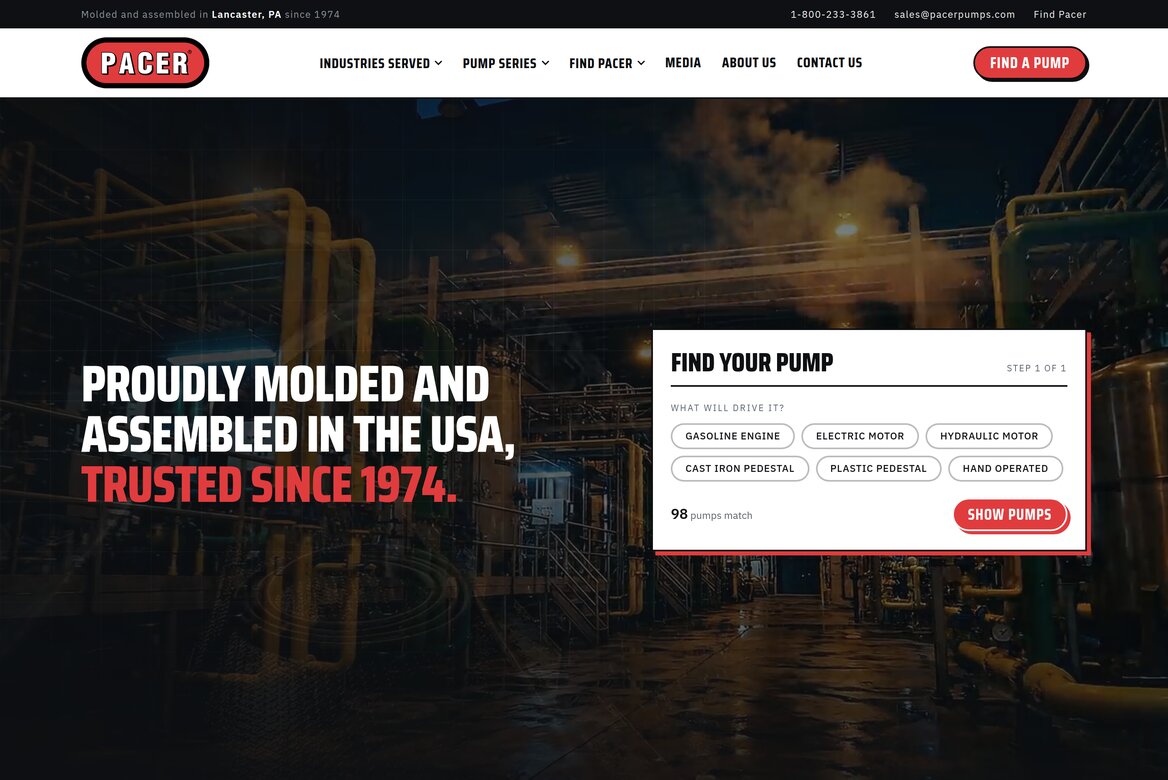
The homepage establishes Pacer’s identity immediately. Its Lancaster manufacturing roots and history dating back to 1974 sit alongside direct access to product selection. This gives first-time visitors context about the manufacturer while allowing returning customers to move quickly into the equipment they need. Information about the company’s manufacturing processes, testing practices, and experienced team adds substance to its positioning.
We organized the navigation around the main reasons someone visits a pump manufacturer’s website. Visitors can explore industry applications, browse pump series, locate technical data, and find purchasing resources. These routes accommodate different levels of product knowledge. A customer familiar with Pacer can head toward a known series, while someone researching an application can begin with the type of work they need the pump to perform.
The pump finder provides another practical entry point. Visitors can begin with the drive configuration available to them, including gasoline engines, electric motors, hydraulic motors, pedestal options, and hand-operated equipment. Making that choice prominent helps connect the website experience with a real equipment requirement early in the selection process.
We also gave the eight pump series a consistent presentation. The series overview brings together product imagery, descriptions, and key characteristics so visitors can understand the purpose of each family. It distinguishes versatile transfer pumps from hand-operated equipment, potable water models, flooded-suction pumps, and higher-volume dewatering options. Those distinctions give buyers a useful starting point before they investigate individual models or request guidance.
Technical resources received a clear place in the website structure. We organized performance curves, installation manuals, parts lists, and available rebuild information by series. Customers evaluating equipment can reach supporting documentation, while existing owners have a direct route to information needed for operation and maintenance. This makes the website useful across the life of the product, from initial research through ongoing support.
Our manufacturing SEO approach connected the product lineup with the applications buyers research. Industry pages provide a place to explain how Pacer’s equipment supports particular tasks, rather than relying entirely on model names or broad product descriptions. The agricultural content, for example, addresses fertilizer transfer, sprayer filling, irrigation, construction materials, and available power configurations. These details connect the manufacturer’s products with recognizable customer needs.
We applied answer engine optimization for manufacturers through clear explanations, descriptive headings, and content organized around relevant buyer questions. The agricultural page explains what transfer pumps do, where they are used, and how thermoplastic construction relates to chemical handling. This gives visitors more useful answers during research and provides search and AI platforms with clearer context about Pacer’s capabilities. The purpose is to make the company’s expertise easier to understand and reference wherever a buyer begins their search.
We also brought the manufacturing process into the customer’s evaluation. The website explains molding, hand assembly, pressure testing, and flow testing, giving visitors concrete information behind Pacer’s American manufacturing message. Presenting those steps helps buyers understand how the company produces and checks its equipment.
Finally, we connected product research with practical purchasing and contact options. Distributor and retailer pathways help visitors understand where to buy, while prominent contact information gives customers a route to discuss fluid requirements, operating conditions, or product selection with Pacer’s team.
The completed website gives Pacer a more effective way to present its manufacturing experience, explain its product range, and guide customers through technical research. It supports buyers who know exactly what they need and those who need help narrowing their options, with a stronger content foundation for traditional search and AI-assisted discovery.
Is Your Manufacturing Business Next?
Your website should help buyers understand what you manufacture, evaluate your capabilities, and take the next step. Contact MFG Empire to discuss website design, SEO, and AEO built around your products and customers.