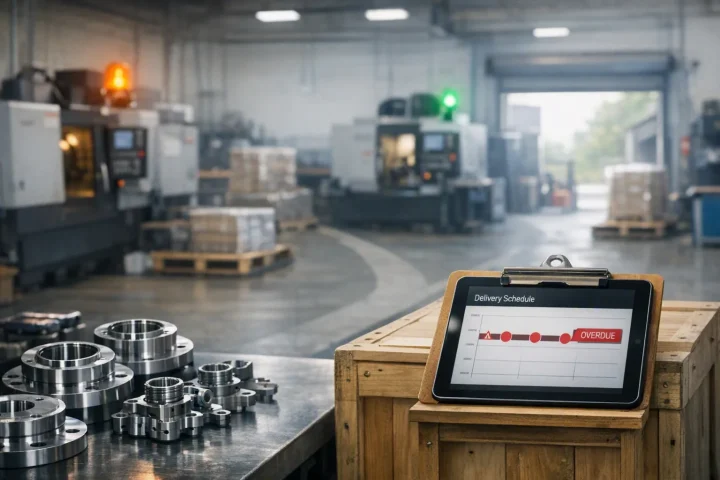

A medical device manufacturer discovers unauthorized activity on April 27, 2025. Within hours, production lines grind to halt. Customer orders pile up unfulfilled. The attack forces facilities to operate below capacity for weeks. The company—Masimo Corporation—is just one of hundreds of manufacturing victims in 2025’s unprecedented surge in industrial cyberattacks.
Welcome to the new reality: manufacturing has become the primary battleground in a global cyber war. The question is no longer if your facility will be targeted, but when—and whether you’ll survive the attack.
The Staggering Numbers Behind Manufacturing’s Cyber Nightmare
The statistics are sobering. Since 2019, manufacturing has experienced a 300% surge in cyberattacks. Ransomware attacks on industrial control systems doubled in 2022 alone and have continued accelerating. The average cost of a data breach in the industrial sector hit $5.56 million in 2024—an 18% increase from 2023. Global losses in manufacturing from cybercrime are rising by 125% annually.
But raw numbers don’t capture the human impact. When ransomware locks up a factory’s systems, it’s not just data at risk—it’s jobs, livelihoods, and entire communities dependent on manufacturing employment. When hackers infiltrate operational technology controlling physical machinery, worker safety becomes a genuine concern.
The World Economic Forum and IBM X-Force confirm that manufacturing cybersecurity losses are increasing faster than any other industry. RansomHub, the most prolific threat actor in 2024, claimed responsibility for attacks on 78 manufacturing organizations worldwide. Between 2024 and Q1 2025, 29 distinct threat actor groups actively targeted manufacturing, with most operating under the Ransomware-as-a-Service model that democratizes sophisticated attacks.
Why Manufacturing Became Target Number One
Understanding why manufacturers face disproportionate cyber threats requires examining the unique vulnerabilities of industrial operations:
Operational Technology Vulnerabilities: Many manufacturers still rely on legacy OT systems designed decades ago when cybersecurity was an afterthought. These systems run production lines, control robotics, monitor quality, and manage safety systems—but lack modern security features. They were built for reliability and uptime, not for defending against nation-state hackers and organized cybercrime syndicates.
Convergence of IT and OT: The Industry 4.0 revolution connected previously isolated factory floor systems to corporate networks and the internet. This connectivity enables incredible efficiency gains and real-time monitoring but creates pathways for attackers to move from IT systems (which are easier to breach) into OT systems (which control physical processes).
High-Value Data: Manufacturers store exactly what cyber criminals and nation-state actors want: proprietary designs, blueprints, trade secrets, customer lists, financial data, and intellectual property worth millions. Industrial espionage is lucrative whether you’re a competitor seeking advantages or a foreign government building domestic capacity.
Critical Supply Chain Role: Manufacturers play vital roles in global supply chains. Attacking one manufacturer can cascade through entire industries. Cybercriminals exploit this leverage—knowing manufacturers will pay ransoms to avoid disrupting customers and losing contracts.
Low Cybersecurity Maturity: Despite facing mounting threats, many manufacturers lag in cybersecurity investment and awareness. Phishing attacks work because employees lack training. Weak passwords persist because security isn’t prioritized. Network segmentation is absent because “it’s always worked this way.”
Intolerance for Downtime: Manufacturing operates on thin margins and tight schedules. One hour of downtime can cost hundreds of thousands in lost revenue. Attackers know this desperation makes manufacturers more likely to pay ransoms quickly rather than endure weeks of recovery.
The Anatomy of Modern Manufacturing Cyberattacks
Today’s attackers employ increasingly sophisticated tactics that traditional security measures struggle to counter:
Ransomware Evolution: Modern ransomware doesn’t just encrypt files—it exfiltrates data first, creating double extortion scenarios. Pay the ransom or we publish your customer list, trade secrets, and financial records online. Some groups now demand payment both to decrypt files and to prevent data publication.
Supply Chain Attacks: Rather than directly attacking well-defended targets, criminals compromise vulnerable suppliers or vendors and use those relationships to infiltrate manufacturing networks. If an attacker can’t breach your systems directly, they’ll breach your HVAC contractor, your software vendor, or your logistics partner.
Living-Off-the-Land Techniques: Sophisticated attackers use legitimate system tools and processes to conduct malicious activity, making detection extremely difficult. They might use PowerShell, remote desktop protocols, and administrative tools that security systems see as normal activity.
Custom Malware: Groups like Black Basta deploy custom tools like BRUTED malware specifically designed to evade detection. RansomHub’s Betruger backdoor combines with legitimate remote monitoring tools to establish persistent access that survives security scans.
AI-Powered Attacks: Criminals increasingly leverage generative AI to automate phishing campaigns, identify vulnerabilities, and craft convincing social engineering attacks. What once took days to develop now takes minutes.
Nation-State Espionage: Beyond criminal gangs seeking quick payoffs, nation-state actors conduct long-term espionage campaigns stealing intellectual property to benefit domestic industries. These attackers are patient, sophisticated, and well-resourced.
The Human Element: Why Employees Are Both Problem and Solution
Technology alone cannot solve manufacturing cybersecurity challenges. The human element remains critical—and vulnerable.
Phishing and social engineering attacks succeed because humans make mistakes. An employee clicks a link in a convincing email. A contractor uses a weak password. A manager plugs an infected USB drive into a production control system. These simple errors create openings for catastrophic breaches.
But humans are also the strongest defense. Employees who recognize phishing attempts, report suspicious activity, follow security protocols, and maintain awareness create resilient security cultures that technology alone cannot achieve.
The challenge: manufacturing faces a workforce crisis that compounds cybersecurity risks. As experienced workers retire, they take institutional knowledge with them—including understanding of which systems are critical, how networks interconnect, and where vulnerabilities exist. New workers lack this context and may not recognize abnormal system behavior that signals an attack in progress.
Real Consequences: Recent Manufacturing Cyberattacks
The abstract threat becomes concrete when examining recent incidents:
Masimo Corporation (April 2025): Medical device manufacturer forced multiple facilities to operate below capacity after discovering unauthorized network activity. Orders delayed, customers impacted, production disrupted for weeks.
National Presto Industries (March 2025): Subsidiary National Defense Corporation appeared on the InterLock ransomware group’s leak site after a cyberattack disrupted internal systems. SEC filings revealed the incident, highlighting how attacks affect publicly traded manufacturers.
Ingersoll Rand (2023): Ransomware attack resulted in approximately 3% of stolen data being leaked, demonstrating that even paying ransoms doesn’t guarantee safety.
Johnson Controls International (2023): Attack impacted two subsidiaries and encrypted VMware ESXi machines, disrupting operations across multiple facilities.
Mueller Water Products (October 2023): Cyberattack affected both IT and OT systems, wasn’t fully contained until end of November, forced delayed SEC filings, and didn’t resume normal operations until mid-December. Mueller is among North America’s largest manufacturers of water infrastructure products—demonstrating that even critical infrastructure manufacturers face severe cyber threats.
Each incident represents lost revenue, damaged reputation, customer dissatisfaction, legal liability, regulatory scrutiny, and employee stress. Recovery costs extend far beyond ransom payments to include forensic investigation, system rebuilding, customer notification, legal fees, and potential litigation.
What CISA Says About Manufacturing Cybersecurity
The Cybersecurity and Infrastructure Security Agency classifies manufacturing as critical infrastructure requiring enhanced protection. In August 2025, CISA released comprehensive guidance for operational technology security, emphasizing that OT systems “power everything from water systems and energy grids to manufacturing and transportation networks.”
CISA Acting Director Madhu Gottumukkala stated: “As cyber threats continue to evolve, CISA through this guidance provides deeper visibility into OT assets as a critical first step in reducing risk and ensuring operational resilience.”
The Critical Manufacturing Sector Security Guide consolidates industry best practices into frameworks for manufacturers to select and implement security activities protecting personnel, public health, public safety, and public confidence. CISA organizes security practices into four categories: physical, cyber, personnel, and supply chain.
CISA emphasizes that securing manufacturing operations requires addressing vulnerabilities across converging physical and cyber technologies. The agency regularly releases Industrial Control Systems advisories—twenty-two in May 2025 alone—providing timely information about current security issues, vulnerabilities, and exploits.
For manufacturers, CISA resources represent authoritative, no-cost guidance developed specifically for industrial environments. Implementing CISA recommendations significantly reduces risk and demonstrates due diligence that can mitigate legal liability following breaches.
The Cost-Benefit Reality: Why Manufacturers Underinvest in Cybersecurity
Despite mounting threats, many manufacturers continue underinvesting in cybersecurity. Understanding why requires examining the economic realities manufacturers face:
Immediate vs. Future Costs: Cybersecurity investments prevent future losses but don’t generate immediate revenue. In competitive industries with thin margins, spending $100,000 on cybersecurity competes with spending $100,000 on new equipment that increases production capacity and generates measurable ROI.
Complexity and Expertise Gaps: Manufacturing executives understand production, quality control, and supply chain management. Cybersecurity is foreign territory requiring specialized expertise they lack. When technical consultants discuss network segmentation, zero-trust architecture, and AI-driven threat detection, many executives struggle to evaluate recommendations and justify costs.
Legacy System Constraints: Modern cybersecurity tools often can’t be deployed on legacy OT systems without risking production disruptions. Upgrading or replacing these systems costs millions and requires extended downtime. Many manufacturers conclude they can’t afford to fix the problem even when they recognize it exists.
Lack of Perceived Urgency: Until a manufacturer experiences a cyberattack, the threat feels abstract. “It won’t happen to us” thinking persists until ransomware locks systems and production stops. Unfortunately, reactive cybersecurity after an attack costs far more than proactive investment beforehand.
False Security from Obscurity: Some manufacturers believe they’re too small, too specialized, or too obscure to interest attackers. This is dangerously wrong. Automated attacks target vulnerabilities regardless of company size. Ransomware-as-a-Service makes sophisticated attacks accessible to criminals with minimal technical skills. No manufacturer is too small to attack.
The AI Double-Edged Sword
Artificial intelligence presents both opportunities and threats for manufacturing cybersecurity:
AI for Defense: Machine learning algorithms can detect anomalies indicating cyberattacks, analyze threats faster than humans, automate routine security tasks, and predict vulnerabilities before they’re exploited. AI-driven quality control and production monitoring extends naturally to security monitoring.
AI for Attack: Criminals use AI to automate phishing campaigns, identify vulnerabilities in systems, develop polymorphic malware that evades detection, and scale attacks that previously required extensive manual effort. Generative AI creates convincing deepfakes for social engineering attacks and generates code exploiting newly discovered vulnerabilities within minutes of public disclosure.
The arms race continues accelerating. Manufacturers who adopt AI-enhanced security gain advantages, but attackers who leverage AI move faster than traditional defenses can counter.
Strategic Defense: What Manufacturers Must Do Now
Effective cybersecurity requires layered defenses addressing technology, processes, and people:
Network Segmentation: Separate IT and OT networks so breaches of corporate systems can’t reach production controls. Implement additional segmentation within OT to contain compromises.
Access Controls: Enforce multi-factor authentication, strong passwords, and least-privilege access. Regularly review and revoke unnecessary permissions.
Patch Management: Maintain updated software and firmware across all systems. For legacy OT that can’t be patched, implement compensating controls like additional monitoring and network isolation.
Backup and Recovery: Maintain offline, immutable backups that ransomware can’t encrypt. Test recovery procedures regularly to ensure you can restore operations without paying ransoms.
Employee Training: Conduct regular cybersecurity awareness training covering phishing, social engineering, password hygiene, and incident reporting. Make security everyone’s responsibility.
Incident Response Planning: Develop and practice plans for responding to cyberattacks. Know who does what, how to communicate during crises, when to involve law enforcement, and how to recover operations.
Vendor Management: Assess third-party cybersecurity posture. Require security standards in contracts. Monitor for vendor breaches that could affect your systems.
Continuous Monitoring: Implement tools that provide visibility into network activity and alert on suspicious behavior. Many breaches go undetected for months because manufacturers lack monitoring.
Threat Intelligence: Subscribe to industry-specific threat intelligence sharing organizations. Learning about attacks targeting similar manufacturers helps you prepare defenses.
Digital Presence Security: Your manufacturing website and digital marketing platforms represent potential attack vectors. Ensure your manufacturing website implements security best practices including SSL certificates, regular updates, and secure hosting.
The Visibility Paradox: Cybersecurity Requires Balance
Manufacturers face a paradox: you need online visibility to attract customers and compete effectively, but every digital touchpoint creates potential attack surface.
The solution isn’t hiding from the internet—it’s intelligent security architecture. A well-designed manufacturing website with proper security measures provides customer value while protecting systems. Effective social media marketing for manufacturing companies demonstrates capability without exposing operational vulnerabilities.
The manufacturers thriving in 2025 combine robust cybersecurity with strong digital presence. They understand that visibility and security aren’t contradictory—they’re complementary aspects of modern business operations.
The Bottom Line: Cybersecurity Is Survival
The manufacturing cybersecurity crisis will worsen before it improves. Attacks are increasing in frequency, sophistication, and impact. Ransomware-as-a-Service democratizes advanced attacks. Nation-states intensify industrial espionage. AI accelerates both attacks and defenses.
Manufacturers have three choices:
Ignore the threat until an attack forces a crisis response that costs far more than proactive investment would have cost.
Implement minimum viable security that reduces but doesn’t eliminate risk, accepting that breaches will likely occur but their impact can be managed.
Build comprehensive security programs that address technology, processes, and people across IT and OT environments, accepting the investment as cost of operating in the modern threat landscape.
The first option guarantees failure. The second option manages risk but accepts significant residual exposure. The third option requires substantial investment but provides the best chance of avoiding catastrophic incidents.
Your choice determines whether your manufacturing business survives the decade.
How MFG Empire Helps Manufacturers Balance Visibility and Security
Manufacturing requires online presence to compete, but every digital asset needs proper security. MFG Empire specializes in building secure, high-performance digital platforms for manufacturers:
Secure Website Development: We implement security best practices from the ground up—SSL certificates, secure hosting, regular updates, and protection against common vulnerabilities. Your manufacturing website showcases capabilities without creating security liabilities.
Digital Marketing That Respects Security: Our manufacturing marketing strategies generate leads and build brand awareness while maintaining proper security boundaries between public-facing content and internal operations.
Performance Without Exposure: We understand manufacturing operations and ensure your digital presence highlights capabilities without inadvertently exposing operational details that could aid attackers.
Ongoing Security Maintenance: Websites require regular updates to remain secure. We provide ongoing maintenance that keeps your digital presence protected against emerging threats.
With over 20 years of manufacturing experience from shop floor to front office, we understand both the operational realities you face and the security requirements modern businesses demand. We build digital assets that generate revenue while maintaining appropriate security posture.
When customers search for manufacturing capabilities, will they find you—with confidence that your digital presence reflects operational professionalism and security awareness?
Contact MFG Empire today to discuss how we can build secure, high-performance digital platforms that drive business growth without compromising security.
Works Cited
“Addressing Growing Concerns About Cybersecurity in Manufacturing.” IBM, 8 Aug. 2025, www.ibm.com/think/insights/addressing-growing-concerns-cybersecurity-in-manufacturing. Accessed 13 Oct. 2025.
“CISA and Partners Release Asset Inventory Guidance to Strengthen Operational Technology Security.” Cybersecurity and Infrastructure Security Agency, 13 Aug. 2025, www.cisa.gov/news-events/news/cisa-and-partners-release-asset-inventory-guidance-strengthen-operational-technology-security. Accessed 13 Oct. 2025.
“Critical Manufacturing Sector Security Guide.” Cybersecurity and Infrastructure Security Agency, 29 Sept. 2025, www.cisa.gov/resources-tools/resources/critical-manufacturing-sector-security-guide. Accessed 13 Oct. 2025.
“Cyberattacks that Shook Manufacturing in 2025.” Asimily, 13 Aug. 2025, asimily.com/blog/cyberattacks-manufacturing/. Accessed 13 Oct. 2025.
“Hacktivists, State-Sponsored Groups Step Up Cyberattacks Targeting Manufacturing Operations and OT Systems.” Industrial Cyber, 2 June 2025, industrialcyber.co/manufacturing/hacktivists-state-sponsored-groups-step-up-cyberattacks-targeting-manufacturing-operations-and-ot-systems/. Accessed 13 Oct. 2025.
“Major Cyber Attacks Targeting Manufacturing Industry in 2025.” SOCRadar Cyber Intelligence, 19 June 2025, socradar.io/major-cyber-attacks-manufacturing-industry-in-2025/. Accessed 13 Oct. 2025.
“Top Cybersecurity Threats in the Manufacturing Industry 2025.” Hoxhunt, 10 Jan. 2025, hoxhunt.com/blog/cyber-security-threats-in-manufacturing-industry. Accessed 13 Oct. 2025.
“Top Manufacturing Cyber Risks of 2025.” WTW, 6 Dec. 2024, www.wtwco.com/en-us/insights/2024/12/top-manufacturing-cyber-risks-of-2025. Accessed 13 Oct. 2025.